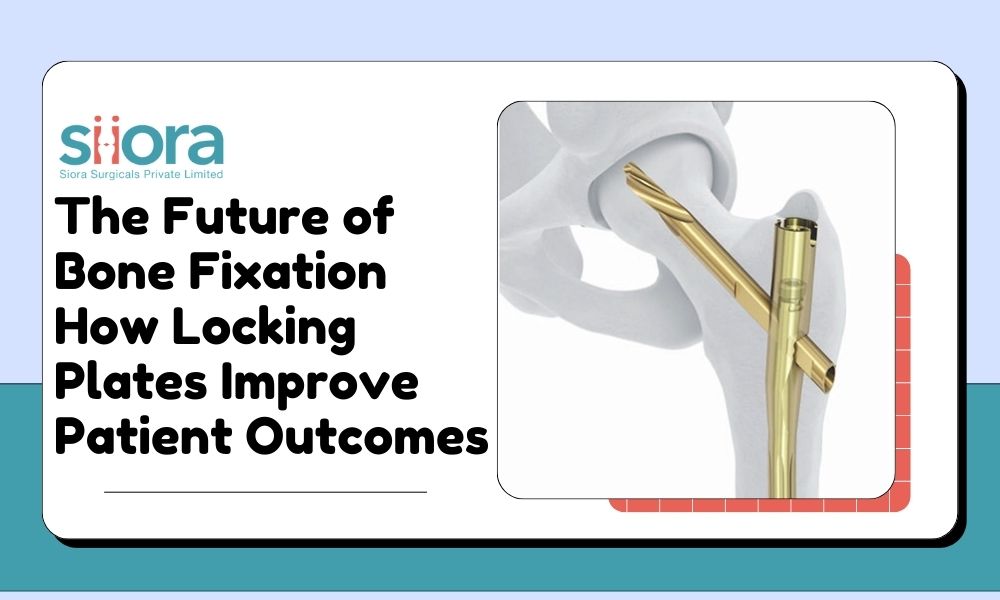
Bone fractures have long been a significant challenge in orthopedic medicine, often requiring precise and reliable solutions to ensure proper healing. As medical technology advances, the future of bone fixation is being reshaped by innovations that enhance patient care and outcomes. Among these innovations, orthopedic locking plates have emerged as a game-changer, providing unparalleled stability and promoting faster recovery for patients.
Understanding Traditional Bone Fixation
Before the advent of locking plates, surgeons relied heavily on conventional plating systems and screws to stabilize fractures. While effective, these methods had limitations. Traditional plates depend on friction between the plate and the bone for stability, which can compromise blood flow and bone health. In some cases, inadequate fixation led to complications like implant loosening, non-union of bones, or the need for secondary surgeries.
The Innovation of Locking Plates
Locking plates revolutionized orthopedic surgery by addressing the shortcomings of traditional fixation methods. Unlike standard plates, locking plates have threaded screw holes that allow the screws to lock directly into the plate, creating a fixed-angle construct. This design reduces the need for the plate to press tightly against the bone, preserving periosteal blood supply and promoting natural healing.
The locked screw-plate interface enhances stability, especially in osteoporotic or comminuted fractures where bone quality is compromised. This increased stability minimizes the risk of implant failure, providing patients with a more reliable and durable solution for fracture repair.
Improved Patient Outcomes
Locking plate technology directly translates to better patient outcomes in several ways:
Enhanced Stability and Healing
By offering a rigid and secure fixation, locking plates allow patients to begin early mobilization, which can prevent complications related to prolonged immobility, such as muscle atrophy or joint stiffness.
Reduced Risk of Revision Surgery
The robust fixation provided by locking plates lowers the likelihood of hardware failure or bone misalignment, reducing the need for additional surgeries and minimizing overall healthcare costs.
Adaptability for Complex Fractures
Locking plates are especially beneficial for complex fractures or fractures in anatomically challenging areas, as they provide multidirectional screw placement options, giving surgeons greater flexibility in achieving optimal fracture alignment.
Better Outcomes for Fragile Bones
For patients with osteoporosis or other bone-weakening conditions, locking plates provide critical support, reducing the risk of complications associated with poor bone density.
The Road Ahead for Bone Fixation
As research continues to refine locking plate technology, future advancements promise even better results. Developments like bioabsorbable locking plates, patient-specific implants, and smart plates with integrated sensors to monitor healing progress could further revolutionize fracture management.
Moreover, advancements in 3D printing and material science may lead to the creation of ultra-lightweight, high-strength implants that are tailored to individual patients, enhancing both comfort and healing efficiency.
The integration of digital planning and augmented reality in surgical procedures will also allow orthopedic surgeons to visualize fractures and plan locking plate placement with unparalleled precision, reducing surgical times and improving outcomes even further.
Conclusion
The future of bone fixation is bright, and locking plates stand at the forefront of this evolution. Their ability to provide reliable, long-term stability while promoting natural healing has already transformed orthopedic care. As technology continues to advance, patients can look forward to faster recoveries, fewer complications, and an overall improved quality of life.
For orthopedic surgeons and patients alike, locking plates represent not just an innovation, but a beacon of hope for a healthier, more mobile future. With ongoing research and technological progress, the next generation of bone fixation solutions will only build on this foundation, continuing to push the boundaries of what’s possible in orthopedic care.
If you are looking to supply international standard range of locking plates and other trauma implants by becoming a trustworthy orthopedic distributor in Dubai, connect with Siora Surgicals Pvt. Ltd.
 Trauma Implants